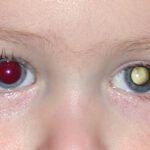
Leukocoria, or “white pupil,” is an abnormal white, grey, or yellow reflection from the retina instead of the normal red reflex, often seen in flash photos. It is a critical sign of serious, potentially vision- or life-threatening eye conditions in children, requiring immediate referral to an ophthalmologist. Common causes include retinoblastoma, cataracts, and Coats’ disease.
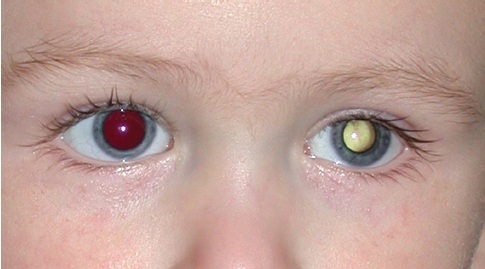
Leukocoria is when the reflected light in the pupil of your eye appears white, gray, silvery or yellow instead of red. The name of this symptom comes from Greek and means “white pupil.” It’s also sometimes called “cat’s eye pupil.” Leukocoria may signal a serious problem within your eye.
When someone shines a light at your eyes, it should cause a faint red reflection in your pupil. That’s called the “red reflex,” and it happens because of light bouncing off the retina at the back of your eye. A common way to see this is by taking a flash-illuminated picture of someone looking directly at you.
If something else is in the way and reflects the light instead of the retina, that can cause leukocoria. This symptom mainly affects children, but it can also happen in adults. But the conditions that usually cause it in adults aren’t as likely to be dangerous.
Key Aspects of Leukocoria
Appearance
The pupil looks white, silvery, or yellowish rather than black or red in photographs.
leukocoria seriousness
Noticing a white pupil in a photo of your child might seem concerning based on the above description. But it’s important to remember that a single photo with a white reflection in the pupil isn’t a cause for fear or panic.
The surface of your eye can also reflect light, and sometimes that can cause an effect that resembles leukocoria but isn’t the same. Leukocoria fills most or all of the pupil. A surface reflection is usually smaller and won’t appear in the same location in different photographs.
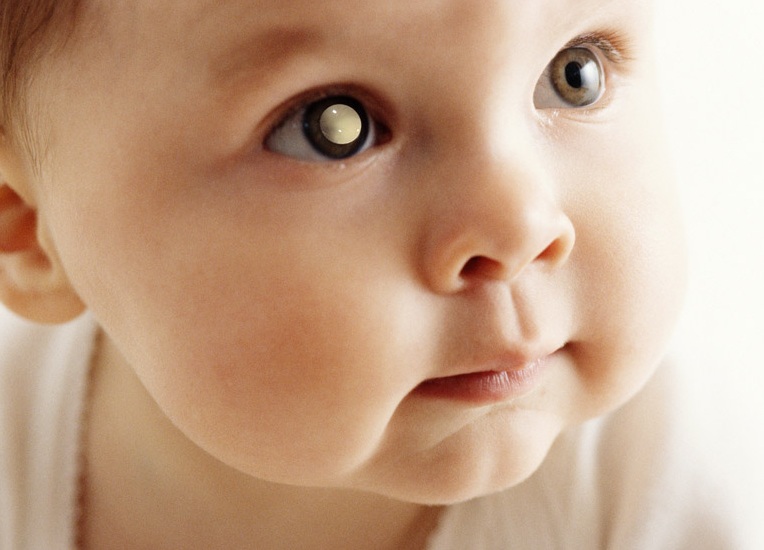
If you’re concerned about possibly seeing leukocoria in a photo, try taking additional pictures. You should take pictures from different angles (above, below, left, right). If a leukocoria-like reflection appears in multiple photos and the color difference fills the entire pupil, a child’s pediatrician or other provider for an appointment as soon as possible.
Common Causes of Leukocoria
Retinoblastoma
A malignant tumor of the retina. This is a cancer of the retina. In rare cases, children can develop a retinoma (a noncancerous growth similar to retinoblastoma) and then have that retinoma turn into retinoblastoma later as adults.
Cataracts
These can be present at birth (congenital) or develop during childhood (pediatric). They make up about 74% of leukocoria cases in children. One-sided cataracts are usually sporadic, meaning they happen on their own. Cataracts in both of a child’s eyes usually indicate another condition like Stickler syndrome or galactosemia.
Congenital Cataracts
A clouding of the eye’s lens.
Retinopathy of Prematurity (ROP)
Damage to retinal vessels in premature infants.
Coats’ Disease
A condition involving abnormal development of blood vessels in the retina.
Toxocariasis
A parasitic infection impacting the retina.
Persistent Hyperplastic Primary Vitreous (PHPV)
A congenital developmental eye abnormality.
The following conditions each account for about 1% of childhood leukocoria cases
Retinal detachment.
Retinopathy of prematurity.
Persistent pupillary membrane.
Other causes (which are even rarer)
Persistent fetal vasculature (PFV) or persistent hyperplastic primary vitreous (PHPV).
Endophthalmitis.
Coloboma.
TORCH infections (infectious diseases that a fetus can contract from the mother carrying it or that a baby can contract from a mother during birth).
Astrocytic hamartomas (benign growths).
Coats disease.
Diagnosis of Leukocoria
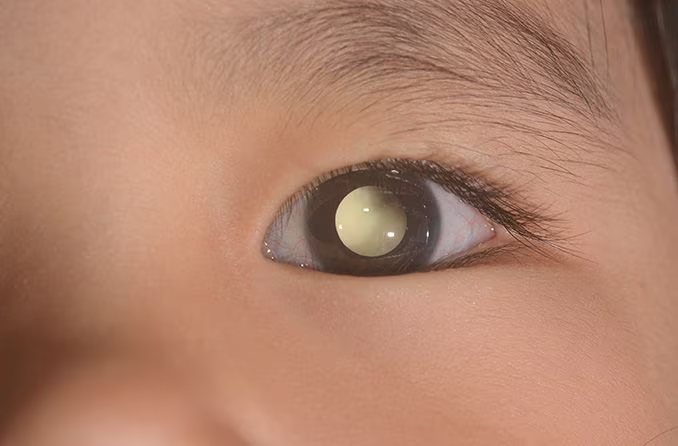
Immediate ophthalmological evaluation is necessary to rule out life-threatening conditions like retinoblastoma.
Screening
Pediatricians typically perform red reflex tests to detect these issues early.
Leukocoria can also be seen in adult eyes due to chronic conditions like severe inflammation or retinal detachment, but it is most closely associated with urgent childhood eye diseases.
Treatment of Leukocoria
The treatment for leukocoria depends greatly on what the cause is. Most causes are treatable, but some are serious enough that they usually involve removal of part or all of the affected eye.
Cataracts
Congenital or pediatric cataracts are the most common cause of leukocoria and are also one of the most treatable leukocoria causes. Cataract surgery in children is virtually the same as in adults. It involves removing the eye’s cloudy lens and replacing it with an artificial lens.
Retinoblastoma
The specific treatment for retinoblastoma depends on the tumor’s exact location, its size, what structures around the retina it affects, and more.
Treatment can involve chemotherapy, radiation therapy, cryotherapy or thermotherapy — or a combination of these methods.
The treatments vary widely for rarer conditions that can cause leukocoria in children. the specific treatment(s) that help.